
Drive your coding-agent fleet from your pocket.
One interface for Claude Code, Codex, Antigravity and DeepSeek Harness, on machines you own.
curl -fsSL https://raw.githubusercontent.com/arniesaha/drover/main/install.sh \
  | bash -s -- --control-store managed
Add --dry-run to preview every action. See the install guide for other options.
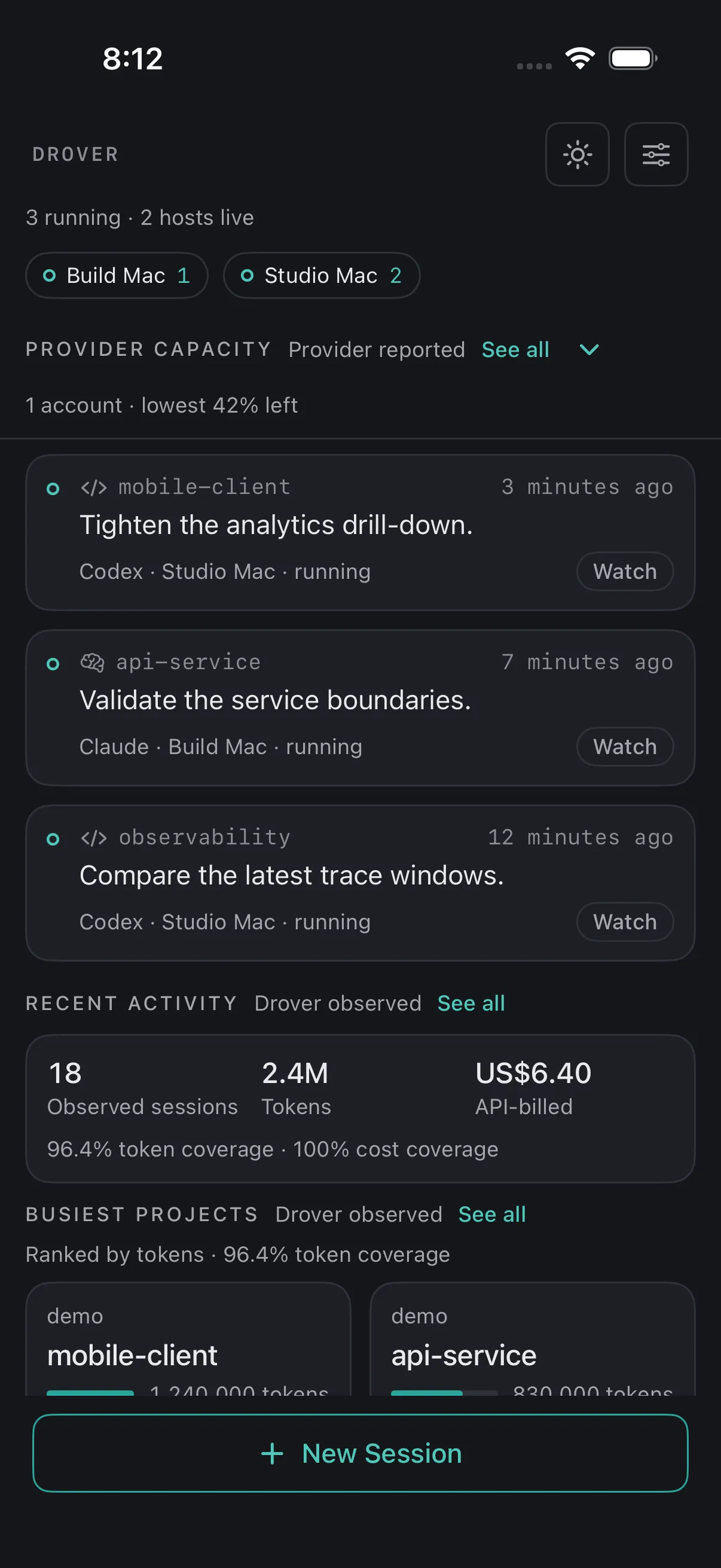
 studio · codex · runninglaptop · claude-code · needs youbuildbox · agy · running
Every harness is its own world.
The native tools are good. The tax comes when you change your habits each time you change the harness.
Different habits
Each harness has its own process, permissions, sign-in and way to resume work.
You are the index
You remember which machine has the work and which terminal waits for an approval.
A switch costs the whole story
To use quota on another subscription, you explain the task again to a different harness.
One interface, not one harness.
Drover does not replace your harnesses. Each one keeps its own models, tools, credentials and files.
The common interface is for you.
- Which sessions need attention?
- Which provider still has quota?
- What question or approval blocks progress?
- Can I start the task on the right machine?
- Can another harness continue without the whole story again?
Orchestrators plan. Harnesses do. Drover connects them.
Hover or tap a layer.
Interaction
ShippedWhere you make the next decision: the phone, a chat or a terminal.
Orchestration
You bring itAgents that plan work and delegate it. They use Drover through MCP and the HTTP API.
Continuity
In progressKeeps work alive across restarts, hosts and harnesses. Partly shipped. This is the direction of the project.
Context
ShippedThe durable record of each session, and the tools that return it to the next session.
Execution
ShippedThe hub routes each operation. A daemon on each host owns the sessions, processes and files.
Harnesses and compute
You bring itEach native harness keeps its own models, sign-in, tools and sandbox. It runs on a machine you own.
Capacity and governance
In progressThe limits and rules across the stack: remaining quota, cost, credentials and data location.
Quota and context are routing state.
You choose the harness and the host. Drover removes the cost of the switch.
Start and steer from your phone
Pick a host, a harness and a project. Send turns. Answer approvals.
See quota before you route
Provider quota windows sit next to observed activity.
Hand off without the retelling
Continue a session on another harness or host. Drover briefs the new session.
Keep sessions through restarts
Drover keeps the native session identity and the ordered events.
Give agents your history
MCP tools return past sessions, open loops and touched files.
Carry your preferences
A portable profile reaches each new session, in three privacy tiers.
Drive four. Observe more.
Each driven harness has a structured adapter. A terminal is always available.
A command plane and a context plane.
The host remains authoritative.
The hub knows the fleet and routes each operation. A daemon on each host owns the agent processes and the files.
Facts first.
Each event goes to a PostgreSQL control store, then to a DuckLake lake. Reads verify their source, or they refuse.
Good tools, different slices.
Herdr, SSH and tmux
Herdr keeps real terminal sessions alive and lets you reconnect from another device.
The premise is the terminal, not the phone.
Claude Code remote control
It feels native on the phone and keeps the path from thought to action short.
It covers one harness, with a session that already runs.
Drover
One way to start, watch, answer and hand off work across harnesses and hosts.
You host it yourself. It is young, and built for one trusted operator.
Based on the author's experience in the launch article. Check each tool's documentation for its current features.
The data residency is yours.
You choose where sessions run, where the data is stored and how hosts join the fleet.
- No Drover cloud. The hub, the hosts and the stores run on your hardware.
- Private networks only. Localhost, a private LAN or Tailscale.
- One trusted operator. Drover is not a multi-tenant service.
The phone is where you make the next decision.
BetaFree. Build it from source today. A public beta is coming soon.
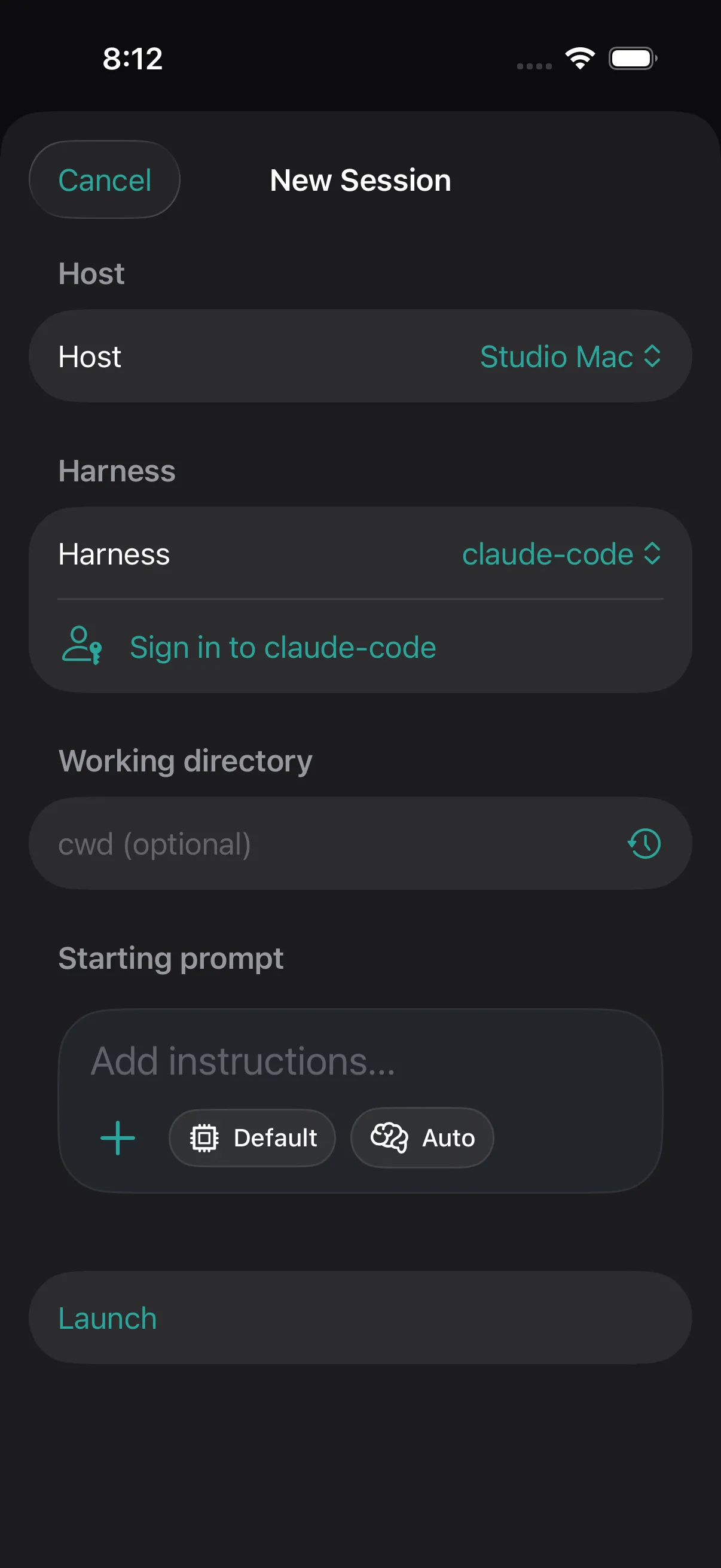
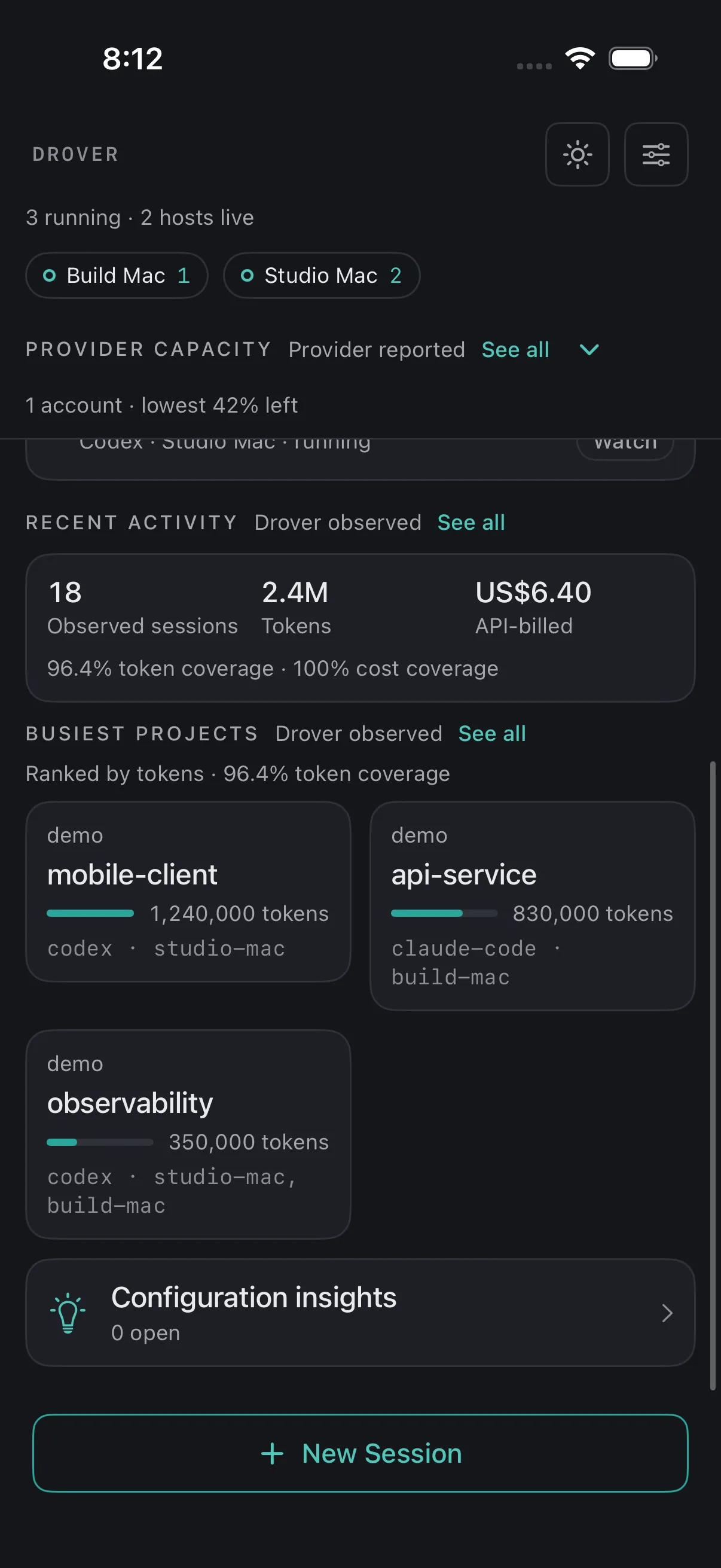
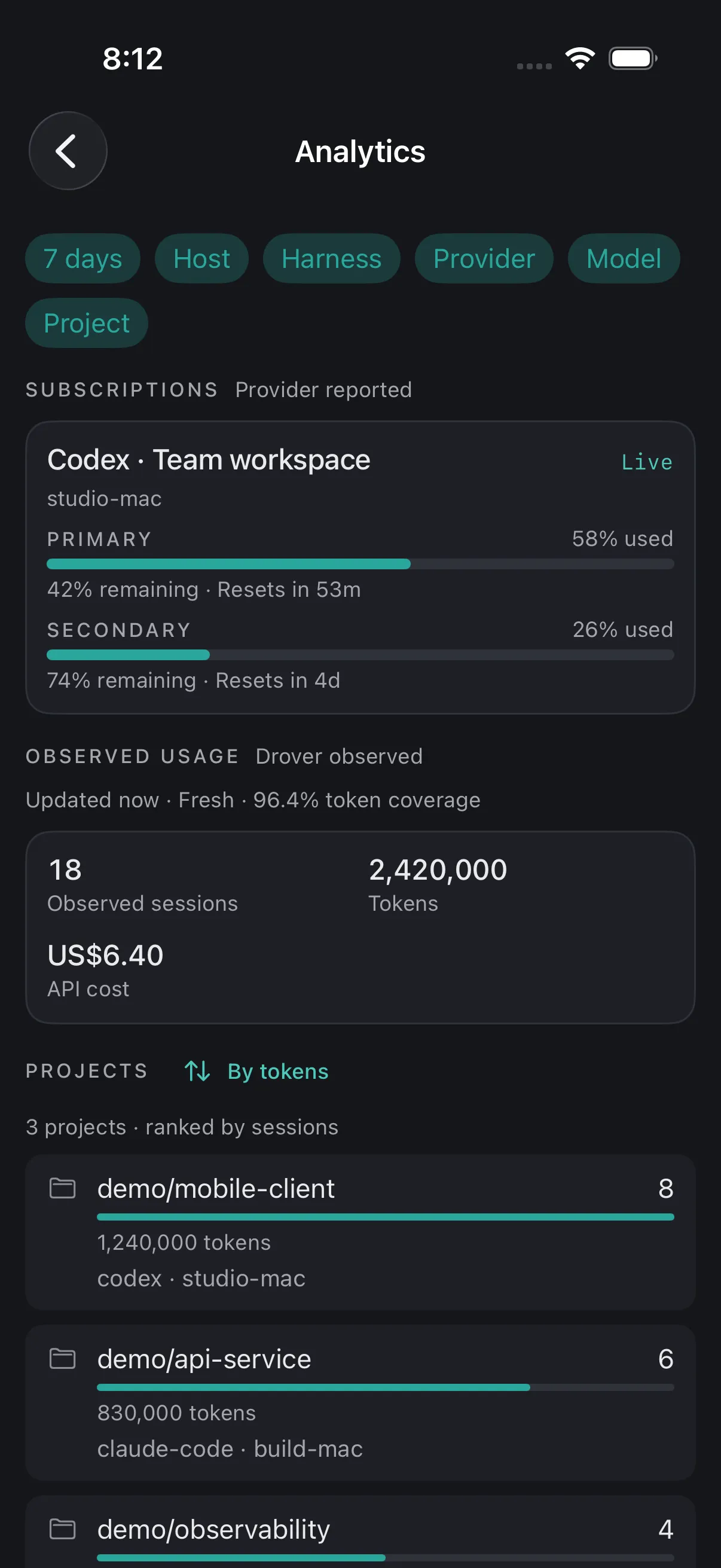
Real screenshots with demo data.